Company new
AOAO Lab Releases Guide on Common Faults and Maintenance of Slurry Mixers to Support Stable and Efficient Operation of Lithium Battery Production Lines
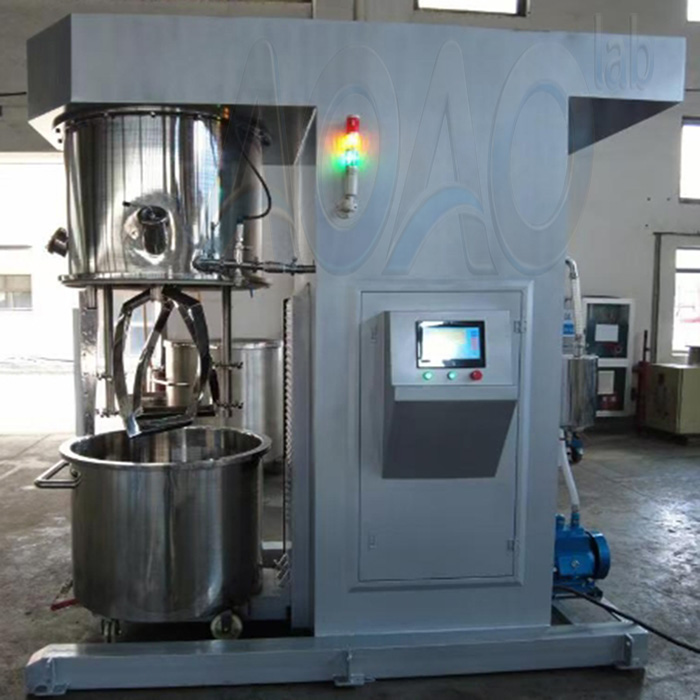
To help Lithium battery manufacturers improve equipment operation and maintenance capabilities and reduce downtime risks, AOAO Lab today officially released the Guide on Common Faults and Maintenance of Slurry Mixers. Based on years of experience in lithium battery equipment operation and maintenance as well as first-line production line data, this guide systematically sorts out typical faults, root cause analysis and standardized maintenance solutions for slurry mixers in practical production, providing the industry with actionable references for equipment management.
Industry Background: The Slurry Mixer as the "Heart" of Lithium Battery Production
Slurry mixing is a core process in lithium battery electrode manufacturing. The stable operation of mixers directly determines the uniformity and consistency of electrode slurry, as well as the stability of subsequent coating processes, which significantly impacts battery performance and production line yield. However, in large-scale mass production, slurry mixers are prone to various faults due to material characteristics, process parameters, daily maintenance and other factors. These faults can lead to scrapped slurry batches, production line downtime, or even irreversible equipment damage, significantly increasing production and maintenance costs for enterprises.
Addressing this industry pain point, AOAO Lab’s equipment engineering team, drawing on equipment operation data from nearly 100 customers, has compiled high-frequency fault scenarios and formed a complete solution covering fault diagnosis, preventive maintenance and emergency response.
Core Content of the Guide: Common Faults and Targeted Solutions
This guide focuses on the four most common faults of slurry mixers in production and provides actionable solutions:
1. Uneven Mixing and Poor Slurry Consistency
Typical Symptoms: Slurry agglomeration, stratification, and large fluctuations in solid content, directly affecting the consistency of subsequent coating thickness.
- Root Causes: Mixing speed and time do not match material characteristics; impeller wear reduces mixing efficiency; slurry formulation and mixing process are not co-optimized.
- AOAO Lab Solution: Adjust the mixing speed profile and vacuum control parameters to adapt to the characteristics of different material system slurries; provide standards for impeller wear detection and regular replacement, helping enterprises establish equipment wearing parts management ledgers, and reducing the rate of poor slurry consistency by more than 60%.
2. Seal Failure and Slurry Leakage
Typical Symptoms: Slurry leakage at the mixing shaft seal, causing material waste, equipment contamination and safety risks to the production environment.
- Root Causes: Aging seals, mismatched seal selection with slurry corrosivity; shaft wear leading to increased seal gaps; insufficient lubrication and maintenance during routine upkeep.
- AOAO Lab Solution: Provide customized seal selection recommendations for slurries of different viscosities and corrosivities; establish a preventive maintenance process for regular seal replacement and shaft wear detection, significantly reducing the incidence of slurry leakage faults.
3. Motor Overload and Equipment Abnormal Noise
Typical Symptoms: Abnormally high motor current, abnormal vibration or noise during mixing, triggering overload protection shutdown in severe cases.
- Root Causes: Slurry viscosity exceeds the equipment design range; improper feeding order causes sudden local viscosity spikes; bearing wear and transmission system faults are not detected in a timely manner.
- AOAO Lab Solution: Provide staged feeding and viscosity control process recommendations to avoid motor overload; develop a graded troubleshooting standard for equipment abnormal noise and vibration, helping operation and maintenance personnel quickly locate early faults in bearings, couplings and other components, reducing unplanned downtime.
4. Vacuum System Failure and Residual Air Bubbles
Typical Symptoms: A large number of air bubbles remain in the slurry, causing pinholes and pitting defects during coating, leading to increased electrode scrap rates.
- Root Causes: Vacuum line leakage, reduced vacuum pump performance; unreasonable defoaming process settings during mixing; lack of slurry gas content detection and control procedures.
- AOAO Lab Solution: Organize regular leak detection and maintenance processes for the vacuum system, optimize vacuum pumping and defoaming parameters during mixing; provide rapid detection methods for slurry gas content, helping enterprises establish process quality control standards and reduce electrode defect rates caused by air bubbles.
From Reactive Maintenance to Preventive Maintenance: Building a Full-Lifecycle Equipment Management System
AOAO Lab emphasizes that the core of solving slurry mixer faults is to shift from reactive maintenance to preventive maintenance. The guide also clarifies standardized equipment maintenance cycles and key points:
- Daily Inspections: Develop a three-level inspection checklist for pre-operation, in-operation and post-operation, focusing on key indicators such as current, temperature, vibration, sealing and vacuum degree.
- Regular Maintenance: Define maintenance cycles and replacement standards for key components such as bearings, seals, impellers and vacuum pumps under different working conditions.
- Spare Parts Management: Provide recommendations for wearing parts selection and inventory management, helping enterprises establish reasonable spare parts reserves and shorten fault response time.
- Personnel Training: Supporting standardized training content for equipment operation and fault troubleshooting to help enterprises improve the professional capabilities of operation and maintenance teams and reduce faults caused by human error.
Continuously Empowering the Upgrading of Industry Equipment Management
"Many slurry mixer faults in enterprises are not caused by the equipment itself, but by the lack of adapted process parameters, standardized maintenance processes and professional operation and maintenance capabilities," said the Head of Equipment Engineering at AOAO Lab. "We are releasing this guide not only to solve the problem of single equipment faults, but also to help the industry establish a more complete full-lifecycle equipment management system, reduce production line downtime risks from the source and improve overall production efficiency."
Moving forward, AOAO Lab will continue to track equipment operation data from front-line production lines, update and optimize equipment maintenance guides, and launch customized equipment operation and maintenance training and on-site support services to help more lithium battery manufacturers achieve efficient and stable equipment operation and escort the high-quality development of the industry.
RELATED NEWS
- AOAO Lab Ships Complete Set of Lithium Battery Equipment for Electrochemical Lab 2026-07-27
- Another Set of Electrochemical Laboratory Equipment Packed and Shipped to Custom 2026-07-25
- Xiamen AOAO New Energy Launches New-Generation One-Stop Integrated Lithium Batte 2026-07-19
- Xiamen AOAO New Energy Lab Upgrades Pilot Production Line for Compact Household 2026-07-15
- Faster Delivery! Spot Welders and Battery Capacity Testers Shipped Directly to a 2026-06-22
CATEGORIES
LATEST NEWS
CONTACT US
Contact: Lily Zhao
Phone: 15880250943
E-mail: Lily@aoaolab.com
Whatsapp:8615880250943
Add: No. 208, Binghu Erli Road, Haicang District, Xiamen city, China